
A Local Newsletter for Startup Founders Hit 5,200 Subscribers in Four Months
Justin Gordon on the LA Grind: a $29 membership with 37 members, events every week, sponsors booked through November, and a six-figure run rate four months in.
 TJ LarkinHost, Local Media HQ PodcastSeptember 26, 2025 · 9 min read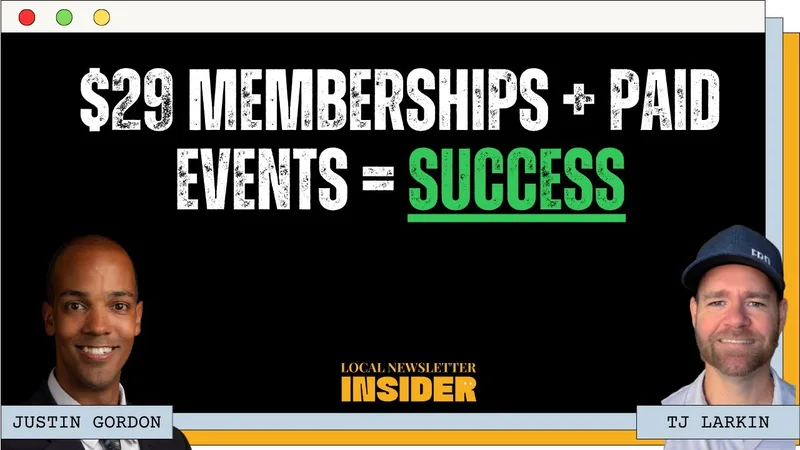
- He pays more for subscribers on purpose. Meta started around 50 to 60 cents each and now runs a bit over a dollar. Justin says it is worth it because these readers are local, in the startup world, and actually show up to events.
- A $29 membership pays for the small stuff. About 37 members, a little over $1,000 a month, mostly profit. It covers the breakfasts and coffees that would never make money on their own.
- Free events feed everything else. A free hike draws 5 to 40 people. Some of them later buy tickets, join, or become sponsors.
- The plan is a playbook, not a bigger workload. San Francisco looks next, then maybe New York. He would use the sponsors he already has and put a city lead on the ground.
Justin Gordon is back for a second visit. His first episode was recorded in the spring, so start there if you want the background on how he got started. We recorded this one on September 25, four months after the first edition of the LA Grind went out. He walks through what subscribers cost him, how a $29 membership works, why he hosts so many events, and where he wants to take it next.
A newsletter for one tight crowd
The LA Grind is for founders, operators and investors in Los Angeles. It is not for plumbing companies or general business owners, though some of those people sign up anyway. Each edition lists events around the city, the latest LA venture deals and job postings. It also has a section on living in LA, anything from a favorite restaurant to a fun event that has nothing to do with startups.
He does not list every event he sees. He picks the ones he likes, and if readers say an event was bad, he drops it or lists it less often. He also hosts his own events, so readers in South Bay, the east side or Santa Monica all have somewhere to plug in.
By the time we recorded, he had passed 5,000 subscribers the week before and was at about 5,200. Meta ads, LinkedIn and Luma, the event platform, all feed that number. People who sign up for an event on Luma often end up on the newsletter list too.
Why he is fine paying more per subscriber
Justin started running Meta ads a few weeks in. Early subscribers cost around 50 to 60 cents. Now it is over a dollar, sometimes closer to $1.50, and he is not testing much copy or creative.
He does not mind. He knows from the welcome survey whether someone is a founder, operator or investor and what neighborhood they live in. He also compares it to his earlier newsletter, which ran closer to $3 a subscriber by the end. And if one new subscriber comes to one event, he figures the ticket fee or a sponsorship has already covered the cost.
The $29 membership
The membership runs on Luma's membership tools, which Justin admits are not a great interface. Members pay $29 a month. He promises two or more events a month, plus free or discounted entry to the others. Tickets for non-members run $20 to $40 or more, and a December holiday party will cost more.
He launched it on a whim about a month before we talked, with what he calls a not great landing page. There were 37 members that day, a little over $1,000 a month in recurring revenue. Retention so far is near 99 percent. He remembers one person who unsubscribed and then wanted back in.
The day before we recorded, he hosted a mixer with a $30 ticket and two sponsors. Twelve members came free as part of their membership. That makes the pitch easy: just save a dollar and sign up.
He is also thinking about a second tier at $100 or $200 a month for business owners at a certain level of revenue or funding. It only works if he can deliver the events behind it, and he already knows the venues and sponsors.
Events without the logistics headache
Justin says he does not enjoy planning events, which he knows is ironic. His trick is keeping them low lift. For a breakfast, he makes a Luma page, sets it to request to join, and only shares the exact location after people sign up. For a bar venue, he looks for one where he only has to hit a minimum spend instead of paying a $2,000 venue fee.
I hate logistics for events. I absolutely hate it. I do not like it, which is ironic now. I do a lot of events now, but I try to always keep it low lift as much as possible.
Some events get help from outside. Three people have offered multi-million dollar houses for free as venues, because they like what he is doing. Hosting a good event at someone's home often means they offer it again.
In four months he has done hikes, runs, basketball games, paddle, a poker tournament, mixers, dinners, breakfasts and coffees. He sees a pattern: people on the east side will not always drive west, and someone who plays paddle may skip a mixer. Different formats reach different people, and they all end up on the same list in front of the same sponsors.
He also tried a group dinner app as a pilot. They ran three dinners in one night, about 18 people, with a $20 fee and everyone splitting the bill. People raved about it, and some of them showed up as friends at his mixer the next day.
Free hikes turn into paying customers
Every month or two, Justin hosts a free hike. Anywhere from five to 40 people show up. He earns nothing directly, but he says he has seen people who came on hikes later buy tickets, attend other events and become sponsors, because they liked the people around them.
That is the long-term view he keeps coming back to. A single event looks like a one-off. A good event gets someone to host again, come back, or sponsor.
Retreats, a summit and polls
For a founder retreat, Justin polled his audience through Beehiiv and listed prices so people could say what they would actually pay. Interest showed up at $1,000 to $2,000 for a two or three night trip, and he put a $10,000 option in the poll too. Two people said yes to that one. He is looking at Santa Barbara, Palm Springs, Lake Arrowhead or San Diego, all within a few hours' drive.
He is also weighing a summit with hundreds of people, run with a partner so he is not handling every detail. He is aiming for late Q1 or Q2 of 2026, and he says it may not happen. LA does not have one big spring event for the startup community, which is part of the appeal.
Going to San Francisco and New York
Justin has worked with sponsors on 15 to 20 deals in the first four months, and a bunch have come back. Many of them serve startup founders in any city, so he could take them to San Francisco first, since it is close, and maybe New York later. He would put a city lead in each place to be the face at events.
The newsletter takes him five to seven hours a week. He guesses another city would take about 20 to 30 hours a month, maybe 40. He polled his audience on sticking to LA versus launching San Francisco, New York or both. About 70 percent said stay in LA, which I pointed out is where they all live. On LinkedIn, where his followers are more spread out, people were much more interested in other cities.
- 01Get subscribers
Meta ads, LinkedIn and Luma event signups
- 02Host events
Free hikes, ticketed mixers and member breakfasts
- 03Talk to people
Weekly events mean weekly conversations with readers
- 04Land sponsors
Show growth, survey results and neighborhood data
- 05Add recurring revenue
The $29 membership, with a higher tier possible
Recruiting, sponsors and what he does with survey data
Justin is looking at recruiting as another revenue line. He posted on LinkedIn asking recruiters how they would work with him, and he asked for specific fee and revenue-split ideas, not "let's talk." If he accepted every vague message, he'd do nothing else all week. He is deciding between a job board and a revenue share, since recruiters often get 10 or 20 percent of a first-year salary and he could split that fee.
He also uses his survey data to sell sponsors. He posts his subscriber growth, the share of founders and investors, and the neighborhoods people live in. He was trying to land one exclusive real estate sponsor for all of 2026 with that data. He says he is booked out for newsletter sponsors through November, and he sees revenue growing every month. He cautions that November and December events may bring in less because of the holidays.
His advice
- Ask for specifics. When he asks for partnership ideas, he asks for fee splits and structure, so he gets fewer replies but better ones.
- Talk to readers in person. Weekly events give him real conversations, like who is hiring or raising money, that no survey would.
- Put the price in the poll. Asking what people would pay tells him what to build.
- Start with a simple version. His membership launched with a weak landing page, and people still joined.
- Think long term. Free hikes and good events pay off as sponsors, members and repeat hosts.
Questions people ask
What is the LA Grind?
How many subscribers does the LA Grind have?
How does the LA Grind make money?
How does Justin grow the list?
TJ is the founder of Local Media HQ. Every week he talks with local media operators about what is actually working in their towns.