
Finding Advertisers With Lead Gen Ads
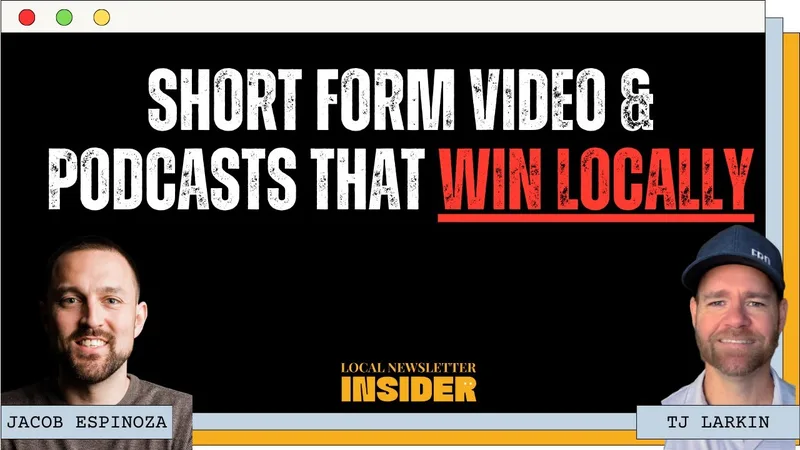
Ashlyn Brooks runs Cypress Digest near Houston. A $10 a day Facebook lead ad pulled 75 advertiser leads in a week for about $60, and she explains what she did with them.
 TJ LarkinHost, Local Media HQ PodcastSeptember 22, 2025 · 10 min read
- Lead ads can bring advertisers to you. Ashlyn ran a simple Facebook lead ad at $10 a day, tested three static images, and got 75 leads in about a week for roughly $60. That is under a dollar a lead, and it cut out most of the chasing.
- Pitch a partnership, not an ad. Her ad copy said to connect your business to the community and become a partner with Cypress Digest. She sends a media kit, then matches the package to what a customer is worth to that business.
- A free sample ad closes deals. She designs the ad for the business before they pay, using their colors. Owners tell her they love it, and that proves she knows what she's doing.
- A $10 directory gives small businesses a way in. Businesses that can't afford an ad package can pay $10 a month for a listing. The same directory feeds her local SEO work for home service companies.
Ashlyn Brooks is a former finance writer who now runs Cypress Digest in Cypress, Texas. When we talked she was about six months in, with roughly 3,300 subscribers, and she had just tried something new for finding advertisers. Instead of emailing and calling business owners one at a time, she ran a Facebook lead ad and let them come to her. This is how she did it, what she does with the leads, and the other pieces she's building around the newsletter.
From finance writing to owning her own thing
Ashlyn started out as a civil engineer. The 12-hour days weren't for her, so she got into writing around 2017 or 2018, back when breaking in was harder than it is now. She wrote about finance for Forbes, USA Today and Kiplinger.
She could also see where the industry was heading. She went through three rounds of layoffs in three years and decided she wanted something different, something she owned. She heard an episode with Jazz from Winnipeg Digest and went down the rabbit hole. That's how she found our podcast.
She already had most of the skills. She knew the beehiiv platform, SEO, how to write for an audience and keep a voice, and enough design to give direction. The only question was whether she'd actually go for it. Six months in, she's at about 3,300 subscribers, a 53.6% open rate and almost an 11% click-through rate.
Test everything, kill what doesn't work
Ashlyn told us she has implemented almost everything we've suggested on the podcast, and she recommends other publishers do the same. Her reason is that your market may not look like anyone else's. Her rule is to test everything and be willing to kill what doesn't work, because there's no such thing as a sunk cost fallacy.
She started with one-on-one outreach, finding business emails on their websites. She hit a lot of gatekeepers and catch-all inboxes. Instagram DMs worked pretty well, but sometimes the owner read them and sometimes nobody did, so it wasn't repeatable. Scraping emails worked okay too. She wouldn't try it at scale, because she thinks it would ruin your deliverability.
Apollo for about $30 a month
What she found useful was Apollo.io, which she calls a very affordable version of Seamless AI. She pays around $30 a month. She can look up a company, find the marketers there, and get a web address and phone number. You get fewer credits than with Seamless AI, but she isn't trying to reach thousands of people a day. It also has a free trial, so she says to test it and kill it if it doesn't work.
Apollo is a CRM, so you can bulk sequence emails from it. She doesn't like that. She still has to read everything over because each industry gets a different offer. She uses it to reach a person directly. She treats a cold call as the third touch, since she doesn't answer calls from numbers she doesn't know either. And she only does it for high lifetime value clients, where she knows she can help and a call could close a good deal.
- 01Instagram
Send the owner a DM first.
- 02Email
Send an email. Apollo shows whether it was opened.
- 03Check
See if they opened the email and read the DM.
- 04Call
Only then pick up the phone, and only for high lifetime value clients.
The $10 a day lead ad
Then came the test she was most excited about. It was a lead ad like a home service business would run, with a simple static image and a form. She tested three images at $10 a day and got 75 leads in about a week. She thinks she spent roughly $60 that week.
She used Advantage Plus but limited it to her city, since interest in Cypress isn't worth anything if the person doesn't live there. The copy used the same structure a home service company would use for a free quote. Hers said to connect your business to the community and become a partner with Cypress Digest. She says to pitch a partnership, not an advertisement. Each lead gave her a name, email, phone number and business.
Connect your business to the community, become a partner with Cypress Digest.
She didn't invent the idea. A local print magazine a couple of cities away had ads like this running for six months, and she knew their targeting was off because the ads were reaching her. She figured something must be working and made her own version. I told her I'd heard from one or two guests, and seen a couple of people on Twitter, who tried this and failed. She said she was expecting two or three leads a week.
What happens when 75 leads hit the inbox
The leads keep coming, and she says you're on the clock the minute they land in your inbox. She has a thank you sequence set up, then follows up by hand. Her numbers change constantly, so she wants to tell each lead the current subscriber count and views. She sends a media kit with her demographics: 75% women, over 80% making $100K, and which neighborhoods they live in.
She tailors the package to the business. A capital management company has a much higher lifetime value per client than a cleaning service, so she doesn't sell them the same thing. By the time of our call she had contacted all of them, and three had come back.
You can tell how serious someone is. A serious lead has a website, branding and an established Facebook page, and is past the startup stage and trying to grow. Others are just feeling it out. She wants to help them too, but her time goes to the serious ones. For a good business that isn't ready, she'll sometimes shout them out for free. We had a similar case, a home baker who couldn't afford a yearly package, so we offered a free classified instead.
Show them the ad before they pay
When a business books with her, Ashlyn designs the ad. Many small and mid-sized owners paid once for a logo, don't have a full-time marketer, and may not know their hex codes. She sends over a sample ad, and that has closed more deals than anything else. A typical reaction is that they love it and want to know how she got their colors. She made it herself.
Only one business has asked to provide its own creative, a big company with international reach. She says to be willing to show your skill and do it for free first.
That ties to something else she told us. She partnered with the owner of a small business called patio pumpkins. A free send to her network got about 60 clicks, and now they're working on an affiliate basis this year. Her hope is that next year they can run paid campaigns together.
A $10 directory and local SEO on the back end
She doesn't have room in the newsletter for every business, so she built a directory. A standard listing costs $10 a month. A premium listing sits at the top with a logo, a better description and maybe a review. It gives small businesses exposure. It also gives her people to call when she has an open ad spot she wants to fill.
She built it with V0 from Vercel on a subdomain, not WordPress. To fill it with real businesses, she uses Local Falcon, which she already uses for local SEO clients. It shows who ranks for a keyword in her city, with name, address and phone. She scrapes the top 20, has GPT turn them into a listing, and feeds that to V0. She checks everything, because V0 sometimes drops an earlier change. She leaves email addresses blank to upsell later.
The local SEO work is aimed at home service businesses. Someone who needs a plumber searches Google, and she says about 75% of traffic goes to the top three results, the map pack. Three months of consistent work is the baseline. She charges a low fee to create and manage the Google Business Profile and keep her client's website and directory listings consistent. She pitches it as SEO on the back end and ads on the front end, both from one person.
Competing with Community Impact
Ashlyn's biggest competitor is Community Impact, which has been around about 20 years and runs a monthly paper plus daily newsletters and websites. She told us she doesn't think there's competition. Someone told her they were quoted around $6,000 there, and she was clear she didn't verify it. She figures that rules out a lot of her town's businesses.
She thinks she wins on price, scalability and timeliness. She noticed their newsletters are modular, with the same stories recycled across areas, and the articles don't go far beneath the surface. She can take something down or laugh off a mistake. The honest limit is her own time. She does two sends a week and scraped every one of 114 events last week. She also homeschools and has a full-time job, so she knows she needs a VA.
Her pitch against print is trackability. She asks a business that bought a magazine ad how many people opened it, and they can only say it went to 5,000 homes. Print is great for awareness, she says, but it can't compete on tracking, and she thinks you need both.
She also has back doors to bigger buyers. She found who won the school district's 2022 marketing contract in the public bid records and is pitching him now. She went to the chamber of commerce's big yearly event and heard from city council members who read her. The advice she says made the biggest difference came from me: people connect with people, so get on social media.
Questions people ask
Who is Ashlyn Brooks?
How did a Facebook lead ad get 75 advertiser leads?
How does Ashlyn compete with Community Impact?
What does Ashlyn offer beyond newsletter ads?
What's her advice for finding advertisers?
TJ is the founder of Local Media HQ. Every week he talks with local media operators about what is actually working in their towns.