
What 2,000 newsrooms taught him about growing local media
David Grant of Blue Engine Collaborative sees inside hundreds of local news businesses a year. Here's why he'd start with free print and short video, and why most publishers underspend on marketing.
 TJ LarkinHost, Local Media HQ PodcastAugust 10, 2026 · 8 min read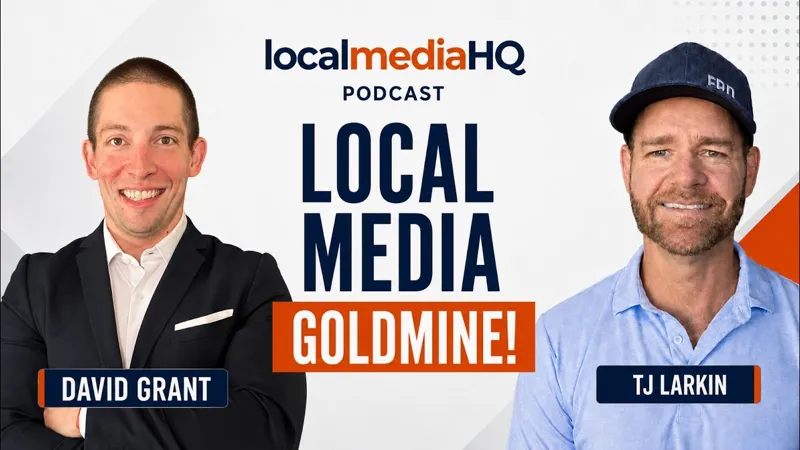
- Print isn't dead. It's targetable. Free monthly print mailed to the zip codes you choose gives advertisers a guarantee digital can't.
- Sales is a skill you train. Newspaper conferences obsess over hiring, paying and keeping ad salespeople. Digital native conferences barely mention it.
- Facebook is paying publishers again. Some smaller publishers David works with make $5,000 plus a month from Facebook creator monetization.
- Most newsrooms spend 1% on marketing. David's advice is blunt: local businesses have to spend money on marketing to grow, and so do you.
David Grant doesn't run a local newsletter. He coaches the people who do. As a general manager at Blue Engine Collaborative, he sees inside a couple hundred news businesses every year, from startup newsletters to print newspapers to public media. Before that he was a political reporter, a newspaper executive and a Facebook employee working on local news. In this conversation he walks through what separates the publishers that grow from the ones that stall, and where he'd put his chips if he started one himself.
How a reporter ended up on the business side
David started as a political reporter in Washington, D.C. Then he noticed the clicks on his stories weren't paying his salary. So he asked the business side if he could help them make money. They asked how. He said he didn't know. That question, how do you turn local news into something that looks like a business, has been the last 15 years of his life.
He's seen it from a newspaper moving from print to digital subscriptions, from Facebook's local news programs, and now from Blue Engine, where the job is coaching. His takeaway is that the people who are "going for it" look about the same whether they work at a startup, a print newspaper or a public media station. They just sit in different seats.
The conversation at a bar that broke his frame
David and TJ met at a conference in Salt Lake City. David walked up and asked how real estate agents and insurance agents, people who aren't reporters, were growing local newsletters so fast. TJ's answer: "oh dude, we buy Facebook ads."
In David's world, organic growth was treated as sacred. Hearing that regular people were simply buying ads and growing big audiences removed a ceiling he didn't know he had. He thinks years of bad stats about local news have capped what publishers believe is possible. Since then, he and TJ have coached about a dozen local news publishers on Facebook ads together, with more on the way. The most common reaction, he says, is disbelief that it's this straightforward.
Why he'd start with free monthly print
David's take on print starts with a folk singer in his 80s who still sells out a concert every year. Things stick around much longer than we think. The death of print has been predicted over and over, and now it's being reinvented by publications like Mountain Gazette and Rough Draft Atlanta.
For a digital operator with no storefront, a piece of paper in someone's mailbox does two things. It proves you're a real neighbor, the same way realtors and other local businesses show up. And it gives you targeting. You buy the data and mail it to whoever you want: every home in a zip code, or only the neighborhoods with money. You can promise an advertiser exactly where it lands.
Community Impact is the example everyone points to. Founder John Garrett and his wife started it at their kitchen table, and TJ notes it grew past $35 million in Texas alone, mostly from print ads.
If David were starting a local news company in Northern Virginia, where he lives, he'd do two things: a creator-style short-form video strategy, and free monthly print. Very few people do both. Creators are scared of print, and print people want to put it on a truck. He thinks the model in between is the advantaged one.
He also likes that it isn't clever. "It's ink on paper, baby." The same goes for Facebook ads: it's straightforward, not easy.
Why legacy brands sell more ads
TJ asked why small legacy publications sign 12-month contracts while bigger digital brands struggle. David gave three reasons.
- 01Relationships
They've been in the market for years and are trusted. When a big paper calls, the business picks up.
- 02Sales training
Newspaper conferences talk constantly about how to train, pay and keep salespeople. If you've put little effort into ad sales talent, don't expect to be good at it.
- 03Audience quality
They describe their readers in detail: home values, kids, where they go, what they do. Not just a list of numbers.
He also wants publishers to go after a business audience on purpose. Buy ads in the chamber of commerce newsletter. Show up where business leaders meet. If they never see you in the room, he says, your email falls to the bottom of the pile.
Exclusivity works, if it's expensive
Category exclusivity, like being the only bank in the newsletter, is real. Competitors will often ask for it. The trap is selling it too cheap and anchoring a big advertiser to a low rate. Sell it for a set time and share of voice, at a strong premium.
Digital has no last page, so you have to create scarcity. And one line does a lot of work in the pitch: your number one competitor isn't in it. That's the part a bank's marketing boss cares about.
Facebook is paying, so post the way it wants
David's strongest advice was about the platform people think is dead. If you aren't using Facebook creator monetization, you're leaving money on the table. Publishers he works with are making 5 grand plus a month just by posting the way Facebook wants: articles and photo posts with the link in the first comment, plus short video.
If you look at that deal and you say no, that says something about you, not about them.
Even a few hundred dollars a month is material for a small publisher. His tip: follow Austin Powell, his former Facebook colleague who posts on Instagram about how the monetization works. And remember these deals change, so use it while it lasts.
Short video needs new storytellers
Distribution keeps asking for vertical video, and most local newsrooms keep handing it still pixels. David's example is Georges Media in Louisiana. They now represent local creators and sell ads for them. They also turned interns and early career staff into on-camera talent who tell stories about local businesses. Those staffers earn more, and the company can offer advertisers print, digital and short-form video in one package.
Spend money on marketing
David asked digital natives, legacy publishers and public media how much of their revenue goes to marketing. He expected different answers. Every group said about 1%. The long-run average across the economy is 2 to 3%, so they could triple it and still be at the floor.
New businesses spend heavily on marketing early, then taper. Most local news audiences just flatten out instead. His message: you're a local business, and local businesses spend money on marketing to grow.
Where the opportunity is
David is bullish. Every grim stat about places with no local news is also demand nobody is serving. He sees three openings: geographic expansion, new kinds of talent, and marketing as a core skill. He also sees agency services coming back. AI is forcing local businesses through another big transition, and many want a trusted local person to walk them through it in person, not a webinar.
His closing thought is that none of this needs reinventing. Get great at something everyone needs, like marketing, then deploy it locally and be a great neighbor.
Questions people ask
Who is David Grant?
Does print still work for local media?
How much can publishers make from Facebook creator monetization?
How much should a local publisher spend on marketing?
TJ is the founder of Local Media HQ. Every week he talks with local media operators about what is actually working in their towns.