
From Instagram page to media company on the Gold Coast
Travis Loveday took What's on Goldy from a side project to 54,000 Instagram followers by quitting his job and posting plain, unbranded event carousels. One carousel pulled 140,000 views.
 TJ LarkinHost, Local Media HQ PodcastJuly 20, 2026 · 8 min read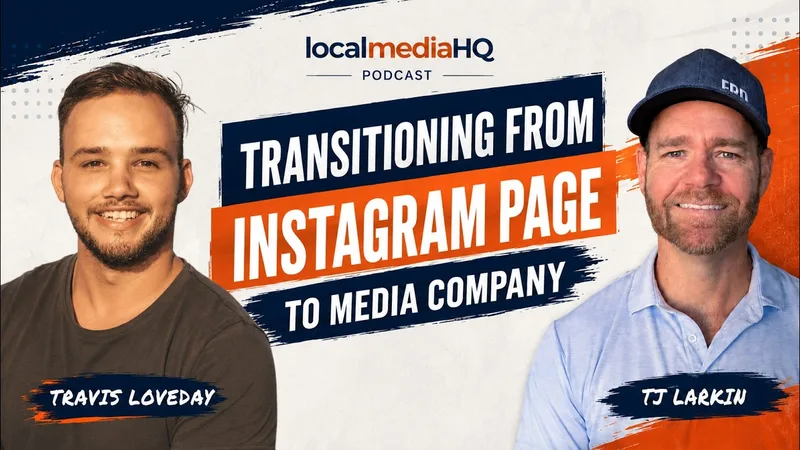
- Raw carousels beat branded ones. One "what's on" carousel with just eight events pulled 140,000 views, about 2,500 new followers and about 3,500 shares in a week. Competitors copied the format with heavy branding, and Travis says theirs performed poorly.
- Quitting made the growth happen. He left his tech sales job in April at about 28,000 followers. A few months later the account was at 54,000, and he says it grew roughly 8,000 a month on carousels.
- A Facebook group question feeds the newsletter. New members are asked if they want a curated events newsletter, and Travis says most type in their email. Add ManyChat on Instagram and he grew about 600 to 700 subscribers in a month.
- Free listings sell the paid ones. Events go on the calendar free. About 70% of people who submit one click for his media kit, and $350 and $650 event packages follow.
Travis Loveday runs What's on Goldy, an events and local business guide for the Gold Coast in Australia. For about four years it was an Instagram page he worked on around a full-time job, and he even calls it a charity for five years. Then he quit in April, and the account roughly doubled in a few months. In this conversation he explains why plain event carousels work, how a Facebook group question builds his newsletter, and what he charges for events.
Four slow years, then all in
Travis started in 2022. He saw big legacy media companies on the Gold Coast and a gap for things that weren't large commercial activities or brand new openings. As he put it, you hear about businesses twice on the Gold Coast, once when they open and once when they close. He wanted to cover the ones in the middle.
He had no newsletter and no website at the start. He posted around his job, and there were stretches, once about three months, where it went quiet. He noticed that any time he stayed consistent for about a month, followers and engagement jumped.
In April he quit with about 28,000 followers. It took two and a half to three years to reach 30,000. After that it went six weeks to 40,000, then four weeks to 50,000. The account now sits at 54,000, TikTok at about 6,000, and the newsletter just under 1,000 subscribers with a 57% open rate and 7% clickthrough.
Why plain carousels beat polished ones
A reel from his partner said Instagram was pushing carousels, so they tried one. The first shared eight events happening that week. They were cautious, so they used photos they already had and put plain Instagram text over each one. No logos, no branding.
Competitors noticed and copied the format. The difference was that they branded theirs heavily and it performed poorly. Travis thinks people are tired of polished content and want something a bit rougher.
On Instagram people are just getting so much AI slop now that they're starting to crave a bit more something a bit dodgy, something a bit tacky, if you will.
Their biggest recent carousel pulled 140,000 views, about 2,500 followers and about 3,500 shares from eight events. TJ's reaction was that it matches what works in Meta ads, where an ugly ad that looks like a person threw it up often wins.
Still made by hand on a phone
Each carousel is built on his phone in the Instagram app. He screenshots an image and adds the event, the date and time, the location, and one or two sentences on why to go. A Claude scraper finds events and fills a spreadsheet each morning, and he shortlists from that. A lot of events also come from direct messages.
He weekly shares a "what's on this weekend" and a "what's on this week" carousel. The midweek one covers trivia nights and live music, and it does well but not as well as weekends. He worries that a fully automated version might perform worse and hasn't tested it. TJ suggested trying that in one of the other cities he has names for.
Newsletter growth from ManyChat and a Facebook group
The newsletter came late. Travis says he didn't have the skills to produce one he was happy with before AI. He started ManyChat after hearing about it on this show, about four weeks before recording, and added about 600 to 700 subscribers in a month. Most came from Instagram.
He also started a Facebook group, What's on Gold Coast. One of the join questions says, in his words, that there's a local newsletter and asks if you want a curated list of events. Most people put in their email, and he says about 80%. He also captures a postcode, which shows which areas he serves. He tested ads to the group and found it cheaper per person than he expected, though he didn't remember the cost.
- 01ManyChat
Moves Instagram followers into the newsletter
- 02Facebook group
Asks about the newsletter when someone asks to join
- 03Postcode
Collected at the same time, to see which areas he serves
- 04Moderation
Lets him re-pitch the newsletter inside the group
A creator portal because he hates making video
Travis doesn't like making local content and says his partner doesn't either. So he built a portal on Replit where creators upload past work and equipment, bid on jobs he posts, and leave each other star ratings. For now it only runs his own jobs.
He also built a separate venue portal. Venues upload and manage their own events, so if a time changes he isn't the bottleneck. A section there lets them ask to work with local creators, and about 40 businesses have said yes. He gets around five messages a day from businesses offering a free meal for content.
He's planning two ways to charge: an annual premium contract that includes creators, or a one-off fee, such as $50 for finding five creators for a free-meal swap. He's integrated Stripe and says it's almost ready to switch on.
What he charges, and how events sell themselves
For about five years the page was free. Then in December someone offered to buy it, and he decided it was a media business, not a page. That's when the website and newsletter came.
Event packages are $350 for a spot in the weekly carousel, the newsletter and the calendar. For $650 you also get your own post. He thinks that's too low, and some customers already want annual contracts.
Small and community events stay free. Anyone submitting an event pastes a link, AI pulls the details, and a box asks if they want to pay to promote it. About 70% click it and get his media kit. Two or three paid events are coming in per week.
A pottery business is paying about $1,500 for a giveaway, a voiceover reel and a place in a date-ideas list reel. That package takes more labor, so the margin is thinner than on events. Events are mostly the return on years of free promotion.
The hours behind it
Travis spends about 25 to 30 hours a week on What's on Goldy. He's also CEO of a funded startup, so he still calls it a side hustle, though a big one. He says leaving his job was the best thing he did, and that the last few months of work are only now paying off in annual partnership talks.
His advice for staying consistent: build things people expect from you. When he skips a post, followers message asking where the events are, which forces him to deliver.
Owning the whole event process
He wants to be the starting point when anyone plans a Gold Coast event. The calendar already flags conflicting events within 10 km when you submit one. He's looking at an Eventbrite API link, and the venue portal also takes job listings for a smaller jobs newsletter.
His reasoning is that content alone is a race to the bottom. A new creator can post one reel and beat his engagement, so he's building what he owns: the newsletter, the website, the calendar and the portals. He has also registered Instagram names for What's on Phuket, Christchurch and Sunny Coast, but hasn't started them.
Filling an empty calendar
The calendar had a cold start problem. His dad kept asking where the website was. Travis started with cold outreach and an easy submit form, and focused on recurring events so a visitor in August would find August events. A carousel of social clubs was one of his top posts, so he built the most complete list he could. Now most events are submitted by organizers, and he doesn't touch them.
Questions people ask
How big is What's on Goldy?
Why do unbranded carousels work better?
How does he get newsletter subscribers?
What does he charge for events?
TJ is the founder of Local Media HQ. Every week he talks with local media operators about what is actually working in their towns.