
A local newsletter built on one person's voice, funded by a plumbing owner
Amy Vartenuk runs Clevelandish for a boss who funds it. In ten months it hit 33,000 subscribers by sounding like a person, not a news outlet.
 TJ LarkinHost, Local Media HQ PodcastJanuary 9, 2026 · 7 min read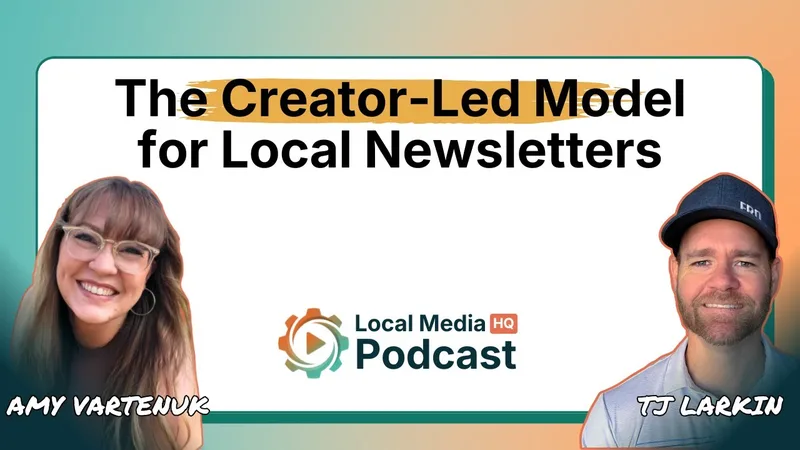
- Her readers asked for her, not the news. Clevelandish started as "Amy and the Clevelandish crew." Polls kept saying readers wanted her opinions, so it became a chatty, personal newsletter.
- Advertisers wanted email, not Instagram. Every advertiser Amy talked to said they didn't care about social. She put her energy into the newsletter, and kept social for credibility.
- Happy ads work, worst-day ads don't. Wineries, pet insurance and med spas do well. Mold remediation and snow shoveling don't fit the brand.
- A funded creator can move fast. John pays for the growth and Amy runs it. About 55% of subscribers came from paid ads, and she says it would work slower without them.
Amy runs Clevelandish, a newsletter for Cleveland and the rest of Northeast Ohio. It doesn't look like the local news. It sounds like a friend telling you where to eat and what weird bit of history she just found. In this conversation she explains how polling readers shaped it, why advertisers ignored her social following, and how she keeps the whole thing from burning her out.
A job posting, a plumbing owner and a bad back
Amy ran a homestaging business in Northeast Ohio for about a decade. She was ready for something new, and her back had given out, so she needed a pivot. Then a job offer arrived.
The offer came from John, who owns Wilson Plumbing, Heating, Cooling and Electric. Amy says his grandfather started it with 99 dollars and a pickup truck. TJ believes it's now a company worth over $30 million. John also runs a big podcast for home service owners, which is where he got the idea to build local digital media.
He wanted someone to take the whole project and run with it. It took a while to find her, because his job posting kept pulling in journalists. That wasn't the right vibe. Amy got the job at the end of February 2025, and the newsletter launched in the middle of March.
How the polls turned a newsroom into a person
Amy says every choice came from data. She polled readers from the start and encouraged replies. Early on it was "Amy and the Clevelandish crew," a generic group that was really just her, and it felt disingenuous.
The polls kept saying the same thing. Readers wanted her opinion, where she went, what she ate, and the weird quirky history she was into. So over the months she kept shifting the newsletter toward that. It ended up feeling like a chatty personal blog, which she says is very different from other local newsletters.
There was a practical reason too. She can't attend every event or send timely news several times a week. Her plan is to bring in other personalities once they can hire, so the brand stays friendly and personal without being only about her.
Why a personality brand survives AI
TJ pointed out that AI can replace "here's some news and here's some events," but not an Amy. Amy had been thinking the same way. She wanted the newsletter to be valuable over time to readers, the owner and her, and not generic or replaceable.
She learned it from homestaging, where she became the face of the business and saw how people reacted. She calls herself a massive introvert, and it took ten years to get comfortable with it. Her view is that people are hungry for real human connection, and legacy media just spits information at them.
TJ added the bigger picture: one brand called Clevelandish can hold many creators. Amy tried a rotating cast in her homestaging business, and clients said they recognized her from social media when she showed up at their door. That is the long-term plan here too.
What social media did and didn't do
Amy spent a lot of time and energy building social in 2025. Each platform sits at roughly 7,000 to 9,000 followers. That gave her legitimacy: people who clicked a Meta ad checked her Instagram and decided it was real, and advertisers did the same.
But she wanted to sell ad space on social, and it never happened. Every advertiser said they only wanted placement in the email newsletter. So she practically stopped posting for a while and focused on making the newsletter better.
What worked was a series called Northeast Ohio mystery meals. New subscribers are asked their favorite place to eat, and she gets hundreds of replies, which also helps deliverability. She pulls one out of a hat in her car, drives there, shows the first name of the person who sent it, and films her honest reaction. She plans to move the series to YouTube in 2026.
People don't want the thing that you need on your worst day. They want the thing that you want on your best day.
Cold emails got ghosted, Instagram DMs worked
Amy first dug up the right person's email, wrote a targeted proposal and tried LinkedIn. It felt like it should work. She got ghosted, because people get a million emails and had no context on who she was.
Switching to Instagram DMs worked much better, for two reasons. Her account shows the brand is real, with a link to the site and visible engagement. And the person deciding on marketing spend is almost certainly on Instagram, so even a wrong person points her to the right one fast. She uses a script and does a lot of cold outreach, then moves to video calls or meetings.
Picking advertisers who fit the vibe
Amy's brand is built on genuine positivity, so mold remediation and snow shoveling ads don't work. A museum that just opened or a new restaurant does. Pet insurance does well, and so do experiences. Their annual partner is a big winery and resort.
She isn't just taking money. She doesn't want an annual partner who gets 15 clicks per send. She wants hundreds, so advertisers come back and leave rave reviews. She started with one-off ads to test the fit before selling packages, and says anything that doesn't evoke negative emotions can work, including med spas. Their 2026 packages are affordable for advertisers compared to what they're used to paying, and on the high side compared to typical newsletter ad prices.
Starting without a big budget
About 55% of her subscribers came from ads and the rest from social and other sources. Amy says she would have done this even without John's money, just slower, with more social and fewer paid ads. If you know what you want to create, she thinks you could launch in three or four months and get a decent number of subscribers without paid advertising.
Her closing advice is to not build a project that burns you out and leaves you stuck. Test, skip what everybody else does, and play to your strengths and interests.
Takeaways for your own newsletter
- Poll early and often. Amy's readers told her what they wanted, and every shift followed.
- Use social for credibility. It helped her ads and DMs, even though it never sold.
- Test before you sign packages. One-off ads showed her which advertisers actually fit.
- Make it sustainable. She plans to add other voices so it doesn't depend on her alone.
Questions people ask
Who is Amy Vartenuk?
How did Clevelandish reach 33,000 subscribers in ten months?
Why does Amy turn away some advertisers?
Do advertisers care about social media followers?
TJ is the founder of Local Media HQ. Every week he talks with local media operators about what is actually working in their towns.