
Why Scott Brodbeck Won't Run Those Junk Ads
Scott Brodbeck built his own automations, grew to 45,000 newsletter subscribers, and shared revenue with Popville. He explains what programmatic pays and how the partnership works.
 TJ LarkinHost, Local Media HQ PodcastApril 14, 2025 · 9 min read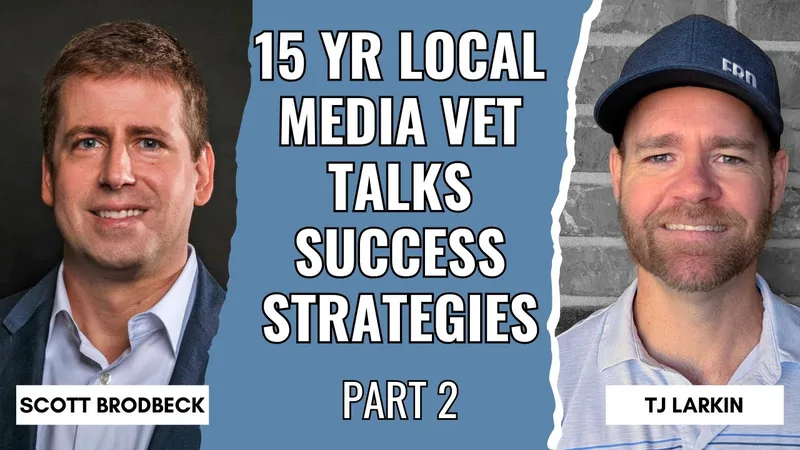
- He built the automations himself. Scott did it over a few years of nights and weekends. He's not a coder, and he says each piece is small and easy. He'd need to almost double his staff to do it by hand.
- Automations need upkeep. When one chain feeds another, an app update can break it. His verdict: "not set it and forget it," and still well worth it.
- Programmatic ads can fund a writer. A million page views a month brings in roughly $5,000 to $10,000. He skips the junk recommendation ads at the bottom of articles anyway.
- Pooling with partners works. Adding Popville to his server and sales team more than doubled that site's revenue. It only works with enough audience on each site.
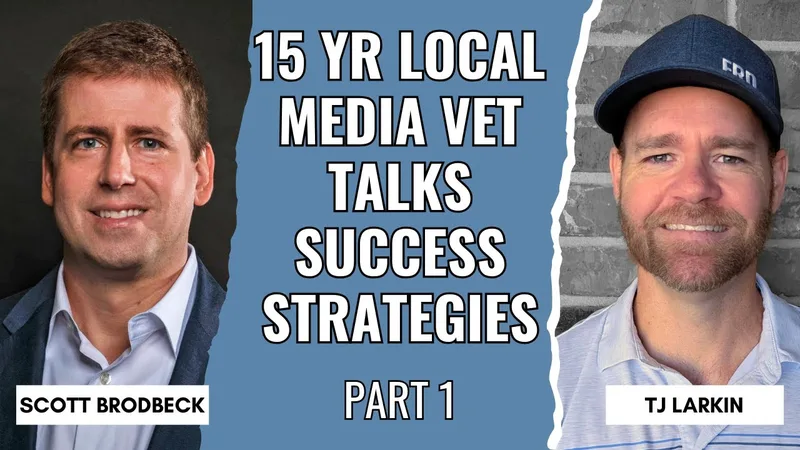
This is the second half of our conversation with Scott Brodbeck, founder of Local News Now. Part 1 covers how he started and how his business makes money. Here we pick up on a push-back question: if someone wanted to copy his setup, how hard is it? From there we get into growing a list of 45,000, what programmatic ads pay, and how he teamed up with Popville.
He built it himself, one small piece at a time
I asked Scott whether this was a huge build, and whether he hired people. He didn't. He built it all himself, over a few years, mostly nights and weekends.
His minimum bar is modest. You need to be able to do some systems thinking: what are the steps from A to B. If you can, most people can teach themselves Zapier for basic stuff without much of a learning curve. Scott isn't a coder. He taught himself visual basic as a kid and sold programs on AOL, then failed at C++. These days he has AI write Python, plugs it into Zapier, and tweaks it.
The payoff is staffing. He'd need to almost double his staff to do by hand everything they automate. His advice: it sounds overwhelming because there are so many pieces, but each piece is small. Start with the lowest-hanging fruit, the thing you do over and over that wouldn't be hard to automate with a no-code tool, then find the next one.
Automations break, so you have to maintain them
Scott was straight about the catch. One automation takes something from the site and puts it in Airtable. Another takes it from Airtable to the newsletter. When an app gets updated, something in that chain can break, and you have to figure out what happened.
His summary: you do need to maintain it, it's not set it and forget it. But in his mind it's well worth it, because it lets you level up what you're doing without increasing cost or headcount.
Pick tools that can talk to each other
His rule when choosing software is to make sure it can connect through APIs or extensions. At Local News Now, a WordPress plugin called Uncanny Automator calls a webhook whenever an article is published, and that goes to Zapier. A sponsored post that comes in through a form can go onto the site the same way.
That's also why he picked Mailchimp. He says some newer tools have good endpoints that work with Zapier, and others aren't as robust. His one-word test is whether a tool is interoperable.
- 01Find the repeat task
Look for the thing you do over and over that wouldn't be hard to automate.
- 02Use a no-code tool first
Zapier covers basic steps without much of a learning curve.
- 03Add the next one
Once the first works, find the next thing and repeat.
- 04Plan for upkeep
When apps update, one broken link in a chain means going back to find what happened.
45,000 subscribers and a Mailchimp ceiling
Scott told me Local News Now has about 45,000 subscribers across its three owned sites and wants to reach roughly 50,000. Most of that list is organic. He ran lead ads early, when they first came out, and put about a thousand dollars into them. It got him around 25 cents per subscriber, then he stopped. He wishes he had gone hard on it from the start.
Later he looked closer and saw those subscribers skew older and aren't quite as engaged. His conclusion is that paid has a role, but your best subscribers are the organic ones who've been with you for years and open every day. They've plateaued a bit from being in market so long, so a new paid campaign is coming.
Mailchimp creates an odd cap for them. They're on a legacy plan with unlimited sends. If they pass roughly 52,000 active subscribers, they'd have to move to a new plan, and since they send every day, he says it would double or triple the cost. He thinks Beehiiv has the advantage here because it's built for media, and he's intrigued by it. For now Mailchimp works.
How the first readers found him
Back when he started, Scott told his friends. After that, growth came in spurts from breaking news that nobody else was reporting, like a big fire or the early snowstorms. People found the site through those stories, and some of them bookmarked it or added it to an RSS reader. He says that behavior isn't as common now because Facebook and Google sit in the middle.
That's why email matters. If he were starting a site today, he would make it email first. When to add a website? His rough marker is 10,000 real subscribers with open rates above 50 percent, or somewhere in the range of $100,000 to $200,000 in revenue.
What programmatic ads pay, and the ads he skips
Scott said a programmatic stack that's well optimized, but not overly so, can bring in $5 to $10 per thousand page views. At a million pages a month that's $5,000 to $10,000 in programmatic revenue alone, which he says will fund a full editorial employee. He didn't run programmatic until the mid to late 2010s and says it let them grow in a way they'd been holding back. Looking back he wonders why he waited.
He ties it to control. Hosting platforms can limit what ads you run, and he mentioned Newspack as one that tells you what kind of programmatic you can use. Giving up control means giving up revenue. He believes in diversifying every reasonable stream. His one line in the sand is the junk recommendation boxes.
I'm not putting the content recommendation trash stuff on the bottom of my articles, no matter how much they pay. That's just a choice I made.
He's happy with branded programmatic ads at the top of the page, which convert pretty well and are worth it for being able to grow editorial and serve readers better.
The Popville partnership
The first partner was Popville, a site in Washington, DC. Scott had been in touch for years with Dan, who runs it. Popville had another outfit out of New York selling its ads and hosting the site. According to Scott, they tried to squeeze too much money out of local businesses, churned their clients too much and undermonetized.
After a few conversations over beers, the idea came up: we already have the capacity, we could add you to our server, and our people are selling already. The thesis, he said, turned out to be very correct, and they were able to more than double Popville's revenue.
Advertisers liked it too. Regional advertisers can decide a small site isn't worth their time. A few somewhat popular sites in one area is a more compelling buy, and one person handles it instead of separate calls and emails.
Why it scales, and what it takes
Most of Scott's partners were on WordPress when they started. Hosting your own WordPress site with one to two million page views a month means updating plugins and having a theme that looks good but loads fast. Local News Now has a custom theme that also handles events and announcements. Its cost doesn't change whether he runs it on one site or three, and the same goes for the sales team.
He's only done this regionally so far. He hasn't yet been confident it works across multiple cities, which is why they're in DC for now. He sees a possible opportunity in other cities with a few good publishers. What's needed is enough of a critical mass of publishers, with real audience (a site with 50,000 page views a month won't sell many ads across a metro), who will give up some control and customization.
How the money is split
I asked if he charges partners anything. He doesn't. They split revenue on the gross, and he doesn't try to net out costs. A 3 percent credit card fee or a sales rep's commission is built into the math. No monthly hosting fee, and a retainer for web developers is part of the overall cost. His view: once you start nickel and diming with different fees, it gets harder to make decisions that benefit everybody.
Be true to your brand, but not too precious
Toward the end I told Scott that the new wave of newsletter publishers does some things better than the old guard, like marketing and the feel of their brands. He agreed, and told me not to lose that. He also said you can't be too precious about not doing things because they're off brand. He was too precious about programmatic for years, and once he added it, the extra money went to editorial and benefited the audience.
His closing point is about time. Producing content every day is a slog. If you love it, automate the stuff that sucks, and stick with it. You can tell the people with a long-term vision from the ones who think it's fun. Scott wants his business to exist in 10 or 20 years.
Questions people ask
Is Scott Brodbeck a programmer?
How much can programmatic ads earn?
How did Local News Now and Popville work together?
When should a newsletter add a website?
TJ is the founder of Local Media HQ. Every week he talks with local media operators about what is actually working in their towns.