
How a Wichita Instagram page became a 25,500-subscriber newsletter
Landon Huslig started Wichita Life on Instagram in 2017, added a newsletter in 2020, and now has 25,500 subscribers and six figures a year, mostly from sponsors.
 TJ LarkinHost, Local Media HQ PodcastMarch 7, 2025 · 9 min read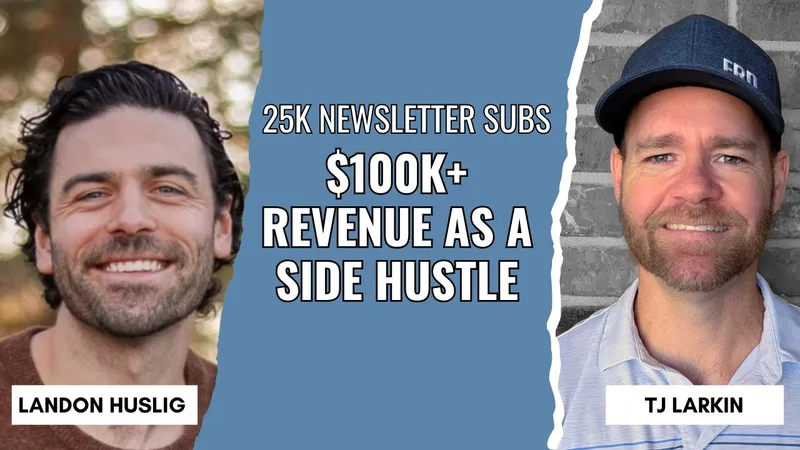
- He built backward. Landon grew Wichita Life on Instagram for three years before he ever sent a newsletter. That following gave him a list to start with and a name sponsors already knew.
- Free subscribers came from DMs. He messaged about 50 followers a day, asked for their email, and typed it in himself. Meta ads came later, at about a dollar a subscriber.
- Sponsors pay for the Instagram number. Around 90% of his six-figure year was sponsorships, often a package of email ads plus a social post. The follower count is public, so it feels bigger to a business owner.
- Keep the pipeline full. He held ad spots for a bank that never signed and stopped prospecting for three months. His fix is to keep selling until the money lands.
Landon Huslig built Wichita Life the opposite way from most newsletter operators. He grew an Instagram account first, added a podcast, and only sent his first email three years in. Today the newsletter has 25,500 subscribers, and the brand has crossed six figures in yearly revenue. In this conversation he explains how he got those subscribers, how he sells sponsorships, and the mistake that cost him three months.
He started with Instagram, not email
Landon and his wife are high school sweethearts who both went to Wichita State. After a year away for work, they moved back and noticed that many of their friends had left Wichita for what they saw as cooler cities. People liked to say there was nothing to do in town, so he started posting what was happening.
He launched the Instagram in April 2017 and the podcast in 2018. The first email was almost an afterthought: a weekly update he sent mostly to push podcast downloads. He admits it was awful, and he offers to send TJ the link.
Why a newsletter was the product
By 2020 he knew he wanted to run Wichita Life as a full-time job, but he didn't know what the product was. He didn't want to be an influencer. Podcasts are hard to grow and hard to monetize, and with three kids he needed something that could pay.
Then he found Morning Brew and 6AM City and saw that a newsletter was the answer. Selling a podcast sponsorship is a vague pitch, he says. Selling a newsletter ad is easy to explain because it's the modern-day newspaper. He sent the first real issue in June 2020 to about 150 people, using the emails he had collected over three years from Instagram and podcast contacts.
At 25,500, he says the list could use a cleaning. He figures the active readers would open closer to 62%. Wichita proper has about 400,000 people and the metro about 650,000. That makes it a big fish in a medium pond: large enough for real advertisers, and not on 6AM City's radar, which went to Kansas City instead.
50 DMs a day, typed in by hand
His best early growth tactic cost nothing. On Twitter and Instagram he went down his follower list and messaged about 50 people a day. He didn't send a link. He just asked if they wanted the newsletter, and if they said yes, he asked for an email and added it himself.
His reasoning was that these people already followed him, so they were warm leads. Even if only half said yes, that is 25 subscribers a day for about 15 minutes of work. He says he has grown thousands of subscribers this way, and he calls it hand-to-hand combat: do the unscalable thing first.
You can do a version of this without a big following. He suggests messaging local bloggers with something like: you seem to like Wichita content, you might like my newsletter, it's free.
Meta ads came later, and cost about a dollar
Landon didn't start Facebook ads until about June 2021, and he only learned how once Ryan Snedden of Naptown showed him his setup. He used Facebook's lead form instead of sending people to a landing page, because every extra click loses some people.
Early on he paid about $1 to $1.50 per subscriber, and now he's under a dollar. He started at around $10 a day, sometimes $5. That's $300 a month, which felt like a lot when the newsletter wasn't making money yet.
His biggest regret in growth is being inconsistent. He wrote every issue, but he didn't push growth steadily. He thinks that if he had, he'd be near 50,000 subscribers now.
The money: sponsors, a job board and one big party
Landon says Wichita Life crossed six figures in revenue, and about 90% of that was sponsorship or ad revenue. A lot of it is package deals, such as two primary email ads plus one social post. It's hard to say what is newsletter money and what is Instagram money.
- 01Job board
Set up on Niceboard in about 10 minutes. It hasn't taken off as much as he hoped, but it made money.
- 02Anniversary party
Tickets run about $40 to $50. It moves to a new venue each year and he doesn't make much on it.
- 03Merch
A few hats and a Miami Vice-themed shirt, mostly for fun and brand building.
He also runs a small supporter program, about $10 a month or $100 a year. Dozens of people pay, not hundreds. He wants to push it harder, and he points to Andrew Smith at Huntsville Explorer, who plugs it in the intro and gives supporters a shot at free tickets and giveaways.
Why sponsors care more about Instagram
TJ asked the question many operators want answered: why do businesses love Instagram when email is the better ad? Landon agrees it's backward. The follower count is public and the subscriber count is private, so a business that sees 50,000 followers feels like it's buying something big. He steers them back to email by pointing out that on Instagram he can't link to their offer, while an email reader can click straight through.
His first pitches were based on thousand impressions, which didn't help because his list was small. Now he just names a price. A typical package quote is $700, and the sponsor pushes back or accepts. The right number depends on the business. A plastic surgery practice can afford a lot more than a coffee shop selling $4 coffee.
He turns down some sponsors, like a bail bondsman, and takes others, like a CBD company run by a close friend. If you're starting out, his advice is to pick a number and go. Even $100 works, though he and TJ agree a very low price can make people wonder if the ad is any good.
He has five or six long-term partners and room for more. He'd rather have annual deals, but he won't turn down something like the airport's campaign, about $3,000 for three months or six weeks. Car dealerships are slow to buy, while an orthopedic practice didn't even ask for analytics. Selling is the hard part for him. He did it around an engineering job and three young kids, and he'd rather be outside playing with them than in an evening meeting.
The mistake: counting eggs before they hatch
A couple of years ago he was talking to a bank that kept hinting it would sign. He held ad spots for them, and he stopped reaching out to anyone else. Three months later it fell through.
I have the eggs in my basket already and they just never hatch. You just have to keep it going. Keep the pipeline full, I think, is the advice.
He says he has no sales background. He also notes that many people know this rule and still don't follow it. His own pattern is to stop prospecting when things are going well, then see a sponsor leave at the end of the year. Now he follows up on big deals every few weeks without being annoying. When he drives past billboards, he writes down who paid for them and reaches out.
Feedback, competition and what's next
Every email has a feedback form. He uses Google Forms or a free alternative, and readers also reply to the email. That's how he learned nobody cared about a weather section, so he cut it. After he moved to Beehiiv, a poll got about 700 replies. Readers still email him about typos, and it has become an inside joke.
On competition, he isn't worried about AI newsletters in Wichita. He says they cover the crime and politics stories he'll never touch. He sees legacy media as the bigger rival, and he thinks Wichita has enough room for everyone. "Collaboration over competition" is a phrase he says people in town repeat.
His five-year goal is for Wichita Life to be five times bigger, with a small team handling social media and events, and himself still editing. He wants a lifestyle business making about half a million dollars a year, plus a daily newsletter and more podcast episodes. He also likes the idea of owning another business and promoting it in his own media, as long as an operator with equity runs it.
Questions people ask
When did Landon start Wichita Life?
How many subscribers does Wichita Life have?
How does Landon make money?
How did he get his first subscribers?
TJ is the founder of Local Media HQ. Every week he talks with local media operators about what is actually working in their towns.