
3,300 subscribers in 90 days with a dining and events newsletter
John Apolinar launched Scottsdale Scoop on January 1 and hit 3,300 subscribers in three months. He covers how Facebook ads and Reddit did it, and how he is chasing high-ticket sponsors.
 TJ LarkinHost, Local Media HQ PodcastMarch 28, 2025 · 9 min read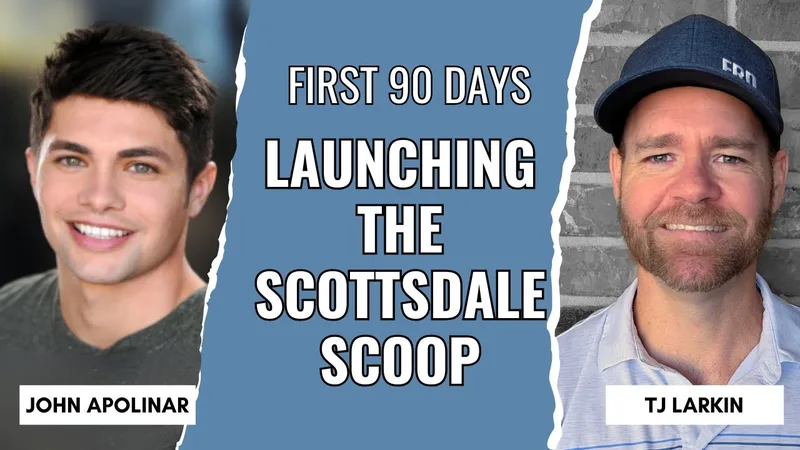
- He skipped hard news. Scottsdale Scoop covers new bars, restaurants, local businesses and the week's events. John keeps it fun and only covers news when it is huge.
- Facebook ads did most of the work. Three months in he had 3,300 subscribers, a 63% open rate and a 13.4% click rate. A weekly Reddit post added about 500 of them.
- He is not selling to mom and pops. John mapped out about 10 high-ticket industries, cold calls decision makers, and pitches sponsors a package of two ads, 30 days apart.
- The list is the real asset. He may not get rich from the newsletter alone, but he owns an audience he can email, and the connections he makes can lead somewhere bigger.
John Apolinar runs Scottsdale Scoop, a newsletter about dining, entertainment and events in Scottsdale, Arizona. He launched it on New Year's Day 2025 and had 3,300 subscribers three months later. We talked about how he is growing it, why he is going after bigger sponsors than most local newsletters do, and how he plans to turn it into a local media company. John came back on the show later, and you can read what changed two months on.
He picked a resolution and started on January 1
John had wanted to start a local newsletter for a long time. He made it his resolution for the year and launched on January 1.
He covers new bars and restaurants, local businesses that just opened, and the week's events. He keeps the tone fun and tries not to cover news unless it is something huge. I told him that starting with entertainment is the right call, since it is easier than covering news when you are not making money yet.
When we recorded, he had not found another local newsletter covering Scottsdale. The competition he sees is the old magazine crowd, aimed at an older, more traditional audience.
3,300 subscribers, mostly from Facebook ads
Three months in, Scottsdale Scoop had 3,300 subscribers, a 63% open rate and a 13.4% click rate. Facebook ads were the bulk of the growth.
The other piece was Reddit. Every week he posts that week's events and links to his signup. He thinks it brought in about 500 subscribers in total, and the moderators have let it slide so far. One person complained that this was an AI thing. John replied that he wished an AI could do it, because curating events is a pain, and offered to pay if the guy knew a way.
He has also moved his ads from Facebook feeds to Facebook stories and Instagram reels, after an earlier guest recommended it. The cost per subscriber went up a little, but each click now earns him an Instagram follower too.
What six years of B2B sales taught him
John has been in B2B newsletters for about six years. He spent three years at Inside.com, then went to Workweek in Austin, where he was basically the second sales hire. He helped build the sales process there, and today his day job is selling sponsorships for Superhuman, an AI newsletter with about a million subscribers.
At a startup like Workweek you have no numbers or track record yet, so he learned how to present an audience early. That carries over. The sponsors are different, though. Local business owners are not sophisticated marketers, so he has to explain what a newsletter is and why it beats a flyer, a direct mailer, a billboard or a magazine ad.
Why he says newsletters beat the magazines
The magazines have been in Scottsdale forever, so a business owner sees them as the safe choice. John sees two advantages for a newsletter. The first is the one-to-one connection: his readers opted in to get the email. The second is exclusivity. A magazine can be 75% ads, while a newsletter with two or three ad spots puts a sponsor next to one or two others at most, not 80 other products.
Tracking is the other gap. I told John what someone in the industry told me, that some magazines assume four people read every copy they mail, so 10,000 copies becomes 40,000 impressions. The real number is probably 10 or 20 times lower, and nobody can check it.
John answers that with a simple frame: it is a direct response channel. Readers are usually on their phones, and if the ad interests them, they click.
What to say when the ad won't get many clicks
I put the hard version to John. A roofer or an HVAC company is not selling to someone who clicks and buys on the spot. John had not run into that objection yet, and said he would lean on the brand. Their business is tied to a community of Scottsdale residents who opted in to hear about events and restaurants.
I agreed. Almost nobody buys a roof until they need one. If a roofer's name shows up in a newsletter people love, that roofer is the first call when the need comes up.
Going after high-ticket sponsors
John is not chasing mom and pops. The price of an ad against their order value and customer lifetime value does not line up. He mapped about 10 industries where a single customer is worth a lot of money. He wants exclusivity deals in each of them. Law firms and med spas are two he has seen advertising around Scottsdale.
You own that list and you have the right to email them really whatever you want until they unsubscribe.
Getting in front of those buyers is hard. He has cold called just about anyone, but few calls connect. He sent some cold emails but does not want to burn his domain. A LinkedIn campaign got no good responses. He now looks up cell phone numbers in Apollo, a B2B lead tool, and calls whoever he can reach.
- 01Map the industries
He picked about 10 where one customer is worth a lot of money to the business.
- 02Skip the small shops
A small shop's ad budget and customer value rarely line up with his rates.
- 03Find a real person
He looks up cell numbers in Apollo because gatekeepers and general email inboxes do not pass his pitch along.
- 04Go for exclusivity
His long-term goal is one sponsor per industry.
His first sponsors and the package of two
John has a few advertisers so far, and he was open about the money: a little less than $1,000 combined. One came from a cold Instagram DM and a call, one came in on its own, and one was a friend with a business.
With an audience of about 3,300, even a decent click rate means few people click. So he sells a package of two. The first ad runs this week or next, and the second runs 30 days later, so the sponsor gets the benefit of a growing list.
Joining the Chamber, and what it changed
The day before we recorded, I had been to a Chamber meeting where I was told the people who hold big marketing budgets will not take your call or read your cold email. You have to meet them where they are. Her advice was to join your chamber and go to its events. She also told me to go to city council and economic development meetings, which is where builders and other big players show up.
John joined the Scottsdale Chamber of Commerce after seeing a video I posted. Three weeks in, he had met some decent-sized business owners. Not all are good sponsor fits, but he is trying to go to at least one event a week. Scottsdale has about five a week, from ribbon cuttings to economic forums.
Getting just one person on a company's team to subscribe also helps. At Superhuman, a deal has a much better chance of closing when someone other than the decision maker subscribes.
Instagram, and the first person he wants to hire
John barely posts on Instagram, just event lists. But businesses can see an Instagram following and cannot see a newsletter's list, and the founder of Cincy Scoop told me Instagram is his first way in the door with advertisers. John knows he needs it. He plans to hire someone to film and edit his reels, so he can stay the face of the brand without making them himself, and he does not want to pay for it until he lands a decent sponsorship.
More than a newsletter
John pitches Scottsdale Scoop as a local media company, and he wants a podcast and in-person events next. Each channel gives him more to sell and more visibility, and he can reuse the content across all of them.
I showed him my own site, built in beehiiv's website builder. John had not thought about it before that moment, and said it might be the way to get a website going, since it makes a newsletter feel like an official media company.
A small section that makes the sponsor pitch easier
John's last tip: think about what content will make the pitch easier. Real estate is big in Scottsdale, so he added a short real estate section to every issue. It is two sentences and a link, but when he calls a real estate sponsor, he can point to something already in the newsletter.
He is not sure what the list will become. He leans toward service businesses, like home services. For now, his bet is on the contacts he makes and the list he owns.
Questions people ask
What is Scottsdale Scoop?
How did Scottsdale Scoop get its first subscribers?
Why is John going after high-ticket sponsors?
How does John sell sponsorships?
TJ is the founder of Local Media HQ. Every week he talks with local media operators about what is actually working in their towns.